Facebook

Twitter

Sunday, September 6, 2015

The view from the other side of the bed

When I wrote my Skeptical Inquirer article "Covert Cognition: My So-Called Near-Death Experience," I was hoping that my experience and my research into covert awareness would help inform the public about the one in five people with consciousness disorders who have covert cognition. But it didn't occur to me (but should've) that my article would also affect the family members who have already faced that unimaginably painful position...from the other side of the bed.

After Skeptical Inquirer shared my VICE Post Mortem column interview on Facebook, which linked to my article, one woman thought the article was fascinating, but also found it “very painful and heartbreaking to read.” That's because she was forced into a situation no one would ever want to be in. Her father was in a coma and he had a do not resuscitate order. She sadly, and obviously extremely reluctantly, gave the order to pull the plug.

I gave her my sympathy and told her that if he had a DNR, then she did what he wanted. Few ever sign a DNR, and those that do usually have a good reason for it. But ever since she was forced into this wrenching decision, she's probably had pangs of doubt. And then she reads my article explaining why people like her father might still be "in there."

In answer to someone who posted that it sounds frightening to be trapped in a seemingly endless dream/nightmare, I responded that it wasn't really that scary. But another Facebook member, who is living through every parent’s nightmare, responded, “I try not to think how frightening it would be. My son has been in a coma since he was 14. He's now 31.” And in a second post, he added, “I hope it's just blank.”

I said, “I'm so sorry to hear this. My heart is with you.” But, really, there’s nothing anyone can say to ease his anguish. I certainly hope I did nothing to deepen it. I'm afraid the answer is that I did, and it makes me sad. Replying to another poster, he said, "One person's comatose recollection does NOT a true story make." He has good reasons to wish my story weren't true, and I hope for him that his son is among the four out of five patients without covert awareness.

It’s likely that many more who have faced these unimaginably painful situations read my article in SI and the VICE interview. Do I regret publishing it? No, because I think my greater obligation is to those voiceless patients with covert cognition. How many are having their plugs pulled not because they have a DNR, but because their doctors say they're hopeless? Kate Bainbridge and others who were in similar situations have spoken of the same concerns. As a writer, I'm in a unique position to spread knowledge of covert awareness to the general public. Perhaps in the future, my words will give ammunition to the arguments of the family members of the covertly aware when doctors pooh-pooh their observations, as mine did.

The daughter who faced that horrific choice with her father noted the advances in covert cognition research Dr. Adrian Owen I mentioned in my article. I added that he’s made considerable progress in developing techniques to detect covert awareness in community hospitals. In the future, people like her may no longer be forced to guess about cognition of their loved ones. 

So, would I do anything different? Yes, next time I will add a sympathetic paragraph about the countless families facing that inadequate testing and incomplete knowledge.

My heart goes out to them all.

Saturday, September 5, 2015

Brain dead arguments: The skeptics version

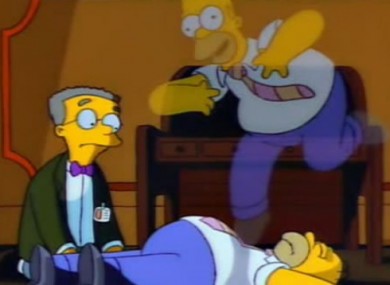
This is only possible for stick figures, but that doesn't mean NDEs aren't a real neurological phenomenon.
So far I've only taken near-death experience true believers to task. But what about the skeptics? I feel I must take exception to some comments a prominent skeptic, Steven Novella, made regarding NDEs.  
I and most scientist favor the more mundane and likely explanation that memories of NDEs are formed at other times, when the brain is functioning, for example during the long recovery process. 
But I remembered my coma-dream immediately after my awakening. I think such esteemed skeptics are throwing the baby out with the bathwater, dismissing NDEs as simple woo. Of course, the thinking goes, the "experiencers" aren't seeing Heaven. As Keith put it, that would be magic. Mind-brain separation is impossible, as well, so NDEs must all be bunk. I fell victim to the same thinking until I researched NDEs. It was a real eye-opener when I realized that NDEs were experienced in a wide variety of circumstances that aren't life-threatening, such as fainting. And there are plenty of credible theorists who support the basic existence of NDEs, but nonetheless doubt the supernatural underpinnings, such as neurology professor Kevin Nelson, with his REM intrusion theory.

Maybe the brains of the "experiencers" were functioning in a way that the available emergency room equipment couldn't detect. Perhaps, if the hospital where that one patient was taken happened to have a spare fMRI machine handy, we could've found out. As I said in my Skeptical Inquirer article Covert Cognition: My So-Called Near-DeathExperience, "NDEs can't be proof of mind-brain separation if the minds of those experiencing them are still active."

Novella goes on to quote the same snippet from the AWARE study that I did in my last blog:  
Among 2060 CA events, 140 survivors completed stage 1 interviews, while 101 of 140 patients completed stage 2 interviews. 46% had memories with 7 major cognitive themes: fear; animals/plants; bright light; violence/persecution; deja-vu; family; recalling events post-CA and 9% had NDEs, while 2% described awareness with explicit recall of ‘seeing’ and ‘hearing’ actual events related to their resuscitation. One had a verifiable period of conscious awareness during which time cerebral function was not expected. 
He uses it as an example of a dodge because the study failed to find a single instance of remote viewing of the targets by the cardiac arrest patients. (Now there's a shocker.) Fair enough, and he's right to question the validity of anecdotal recalled accounts. Yes, even my own. He's being a good skeptic by doing this. However, I took a different lesson from those findings. I believe it's entirely possible that the one patient was indeed aware, though it had nothing to do with mind-brain separation. It was a form of covert cognition.

I think both sides of this issue are succumbing to the same assumption: the brains of these patients are not functioning. I would add...that we can presently detect. The science of covert cognition is quite new, and it contradicts longstanding neurological understanding so radically that the implications haven't fully sunk in.

Now, Novella makes some excellent points about the methodological shortcomings of the study. He's a clinical neurologist and an assistant professor at the Yale School of Medicine, so I'll allow that he knows more about this subject than I do. The same goes for Kevin Nelson, whose extensive research into NDEs has convinced him of the neurological validity of the phenomenon. And let's not forget Dr. Adrian Owen, as well as the other covert cognition researchers who believe, based on their findings, that as many as one in five patients with disorders of consciousness have covert cognition.

If Dr. Owen is able to eventually succeed in developing standardized techniques to sense covert cognition using EEGs, the process could also be applied to heart attack patients. And then perhaps well find that cardiac arrest victims thought to lack brain functioning still have a level of consciousness, as well.

Friday, September 4, 2015

Flights of fancy


In 2008, a multi-center study called AWARE was launched by Sam Parnia, a doctor and assistant professor at SUNY Stoney Brook. The study attempted to determine if out of body experiences during cardiac arrest were real. Images were placed in operating rooms where they could only be viewed if the patient's consciousness were floating above their bodies. I will pause to give the skeptics among my readers a chance to laugh. These same skeptics will not be shocked to learn that not a single patient reported seeing the target images. The NDErs will no doubt have a laundry list of excuses and denials. Here are the results from the study, which was released in 2014.
Among 2060 CA events, 140 survivors completed stage 1 interviews, while 101 of 140 patients completed stage 2 interviews. 46% had memories with 7 major cognitive themes: fear; animals/plants; bright light; violence/persecution; deja-vu; family; recalling events post-CA and 9% had NDEs, while 2% described awareness with explicit recall of ‘seeing’ and ‘hearing’ actual events related to their resuscitation. One had a verifiable period of conscious awareness during which time cerebral function was not expected.
My take on the cases of awareness--especially the one with supposedly unexpected consciousness--is that these were likely due to a form of covert cognition, not mind-brain separation. My cerebral function was not expected either, after all. In once case the awareness was timed with an auditory signal. To me, this is not a confirmation that OBEs are real, only that the patient's brains are still functioning on some level.

This is what the study had to say:
CA [cardiac arrest] survivors commonly experience a broad range of cognitive themes, with 2% exhibiting full awareness. This supports other recent studies that have indicated consciousness may be present despite clinically undetectable consciousness. This together with fearful experiences may contribute to PTSD and other cognitive deficits post CA.
Based on my knowledge of covert cognition, I believe that many OBEs that are purported to be real because they correspond to verifiable events during the patient's resuscitation were actually a mix of covert awareness and imagination. In my coma-dream, my mind integrated many things going on around me into my dream narrative. As I described in my Skeptical Inquirer article "Covert Cognition: My So-Called Near-Death Experience," when I was being turned over in my bed to prevent bed sores, I often saw myself being flipped from outside my body. But I always started out as the person being turned before the perspective shifted and I began watching myself. That's something that frequently happens in ordinary dreams. In this case, the turning was real, but I imagined the details surrounding it.

OBEs are a real sensation for many people, however. In a study of 13,000 Europeans, 5.8 percent had experienced the phenomenon. But it's also a sensation that be stimulated electrically in the brain, as Olaf Blanke's famous experiment showed. The overwhelming evidence suggests that as doctors are frantically attempting to save their lives, these patients' mind roam free...inside their own dying bodies.

Thursday, September 3, 2015

Deathlessly speechless

If I could've said something, it would've been, "Oy!"

In his book The God Impulse, this is what Kevin Nelson had to say about those who believe "experiencers" like Eben Alexander were actually brain-dead during their NDEs:

The brain doesn't die in near-death. Being near-death is very different from returning from death...the brain is nowhere near physically dead during near-death experiences. It is alive and conscious.

Dr. Kevin Nelson is a professor of neurology at the University of Kentucky, and the researcher who conducted the seminal REM intrusion study of near-death experiences referred to in my Skeptical Inquirer article Covert Cognition: My So-Called Near-Death Experience. NDE true believers like to cite the fact that Eben Alexander is himself neurologist. But he only decided that what he experienced during his coma--which was in fact medically induced, unlike mine--was a near-death experience well after the fact. As I did, as well.

That's because we're interpreting our experiences though a prism of our own preconceptions. I think both sides can agree on this point...at least regarding the other side of the issue. The main arguments against my story from NDEers generally fall along the lines of A) It wasn't an NDE because you didn't die. B) You didn't have a "real" life review. [I'll delve further into objection A and the others in future blogs.]

Many of the arguments presuppose that the brains of those having the NDEs were dead at the time. That is impossible, as Kevin Nelson describes in more detail than I can quote. Alexander must know this, as well. He has chosen to disregard the mountains of scientific evidence that contradict his personal theory, which is also in direct opposition to the reports of a doctor who treated him. This is a quote from the excellent Esquire expose of Eben Alexander, written by Luke Dittrich]:

I ask Potter [Dr. Laura Potter, the first doctor to see Alexander in the ER] whether the manic, agitated state that Alexander exhibited whenever they weaned him off his anesthetics during his first days of coma would meet her definition of conscious.
"Yes," she says. "Conscious but delirious." 
In Proof of Heaven, Alexander purports to have yelled out, in a crystal-clear voice... 
"God, help me!"
 Later in the Esquire piece...

Potter has no recollection of this incident, or of that shouted plea. What she does remember is that she had intubated Alexander more than an hour prior to his departure from the emergency room, snaking a plastic tube down his throat, through his vocal cords, and into his trachea. Could she imagine her intubated patient being able to speak at all, let alone in a crystal-clear way?
 "No," she says.
I can tell you from personal experience that after I had my second bout of Legionnaires' disease, I could say nothing while intubated. All who knew me were no doubt relieved.
Keith fanning me with the white board with which I as forced to communicate.

Now, I’ll confess that, as a skeptic, I've done extensive research on NDEs from a scientific perspective, but until now I haven't been exposed to the vehemence of NDEers. We will never convince each other, of course, and I certainly have no wish to try. I can only present the facts and let the readers decide.

And here is one final quote from the Esquire piece:

His survival is a miracle, he [Alexander] says. His doctors told him that he is alive when he should be dead, and he believes intensely that he is alive for a reason, to spread the word about the love awaiting us all in heaven.
I’m alive when I should be dead, too. I consider my recovery to have been remarkable, and certainly unlikely, but not miraculous. And my mission is to spread the word of science and reason.

Wednesday, September 2, 2015

Attack of the Pulpit People

This photos was taken five days before my awakening, while I was in a minimally conscious state, the final step before consciousness. I believe it was in this period that I had my most detailed coma-dreams.
Okay, so what would I say to someone who denies that I had a near-death experience? Well, first the smartass point: I was near death and I had an experience. Actually, it's not so smartass after all. NDEs, as referred to in the VICE interview, can be caused by a wide range of events that aren't even life-threatening. Beyond the ones Simon Davis mentioned--migraines and epileptic seizures--fainting, hyperventilation, even intensely emotional circumstances can trigger an NDE. That's because it's a neurological condition that's often triggered by hypoxia and anoxia--low or absent oxygen.

However, I didn't originally think of my coma-dream as an NDE. I thought NDEs were just something the spiritually inclined believed had happened to them. In other words, that they weren't a real phenomenon. My argument in my first draft of my Skeptical Inquirer article "Covert Cognition: My So-Called Near-Death Experience" was that the reason I didn't have an NDE was due to my atheism and skepticism. But as I learned ever more about NDEs, I began to realize that I had experienced many parallels with classic NDEs. My nonbelief is still the reason why I didn't see angels or heaven, but a true skeptic revises their beliefs when the evidence contradicts them. NDEs are real.

As I stated in both the article and the interview, one of the main convergences with classic NDEs were the numerous elements from my childhood featured prominently in my coma-dream. Instead of a whole-life review, my mind settled on the simplest, most comforting time in my life--sort of a mental fetal position.

Another one, which was also mentioned in the interview and the SI article, were the voices that filtered into my coma-dream. As I researched the article, I came to learn more and more about what happened to me while I was in the coma. In the first part of this two-part blog, I discussed covert cognition. If the brains of people having the experience are still active, then NDEs can't be evidence of mind-body separation.

The third element--the one that tied things together--was Kevin Nelson's REM intrusion theory. Simon did an excellent job presenting the theory, but I would also add that according to Nelson's study, people who are susceptible to forms of REM intrusion like my lucid dreaming are 60% more likely to have an NDE. (In fact, I should've put that statistic in my article.) But what many of the commentators on the Post Mortem column chose to ignore was the implications of the theory. My coma-dream was indeed an ordinary dream, albeit a very long one. And so are all NDEs. The theory states that this is what's responsible for the surreal, dream-like nature of NDEs. The surreal things I saw were inspired by my secular childhood mental landscape, including campy 50s sci-fi films like Attack of the Puppet People. There's also a scene in the classic horror film The Bride of Frankenstein that featured miniaturized people. I grew up without religion, but loving movies like these.

As for the most famous NDE element of all, the light at the end of a dark tunnel, I admittedly experienced no parallel. I believe that's because when I developed anoxia--as my blood pressure dropped so low that I suffered a series of strokes on both sides of my brain--I was already unconscious from the sepsis that was rapidly killing me. If the anoxia had occurred later, I might've seen the tunnel too. It's something that test pilots often report. Even my boyfriend Keith has seen that tunnels the few times he's fainted, though he didn't have an NDE. That's another well-documented physical effect.

A few commentators on the Post Mortem column complained that I couldn't have had an NDE because I didn't die and come back again. I came about as close to dying as you can be without actually dying, but no, I never actually died. As I've already established, however, near death isn't required to have a near-death experience. Many people who have written bestselling Heaven tourism books like Colton Burpo, the kid of Heaven is for Real fame, didn't die. He was in a coma too. And as I stated in part one, Eben Alexander's brain was not in fact dead during his NDE. Indeed, many of the things he stated as facts in his book Proof of Heaven were proven to be impossible in a famous Esquire expose.

The real problem is that some people are so invested in the idea that NDEs are evidence of the afterlife that anyone who contradicts this from personal experience must be denied or attacked. I think it was this same impulse that led one commentator on the Washington Post article about me and my SI article to insinuate that if I were really dying, I would've seen my dead loved ones. Surely then I would've seen Heaven, right? To me, the final nail in the coffin is the comment I read in an article about another coma survivor, Claire Wineland. A Disqus member named NoAZPhilsPhan recounted his own NDE. People always told him that his NDE was real because he heard the voice of a dead friend. But he doubts the reality of his experience because he also handed out presents with Santa Claus and sledded with the Coca-Cola bears. It was around Christmas time. Coincidence?

Tuesday, September 1, 2015

My Skeptical Inquirer article, "Covert Cognition: My So-Called Near Death Experience"


We interrupt this two-part blog about my VICE Post Mortem column interview to present a link to my Skeptical Inquirer article "Covert Cognition: My So-Called Near-Death Experience," which is now up.

Brain dead arguments


It was inevitable that as my story became known outside the skeptical world, some people would feel defensive about my non-spiritual near-death experience and my theories about NDEs. It happened after the Washington post wrote about my Skeptical Inquirer article "Covert Cognition: My So-Called Near-Death Experience." And after Simon Davis interviewed me for his Post Mortem column, as well. To some true believers, books like "Proof of Heaven" reaffirm their faith in their eternal reward. Yeah, life sucks, but in the end I'll get to go to the Club Med in the sky. A recent study shows that thinking about atheists increase thoughts of death, even in atheists, which Simon Davis has written about incisively.

Indeed, it's not surprising that a few atheists who have seen heaven in their NDEs have become believers. Most atheists grew up religious; I was raised an agnostic. As I put it to Simon Davis, angels and heaven were not in my mental landscape. There's a reason that the aliens people tend to see in their "encounters" look a lot like the media depictions...and it has nothing to do with spindly little green men buzzing isolated highways.

I have resisted the urge to reply to the commentators on the column. While the epithet Nazi has yet to be thrown, variations of retard has been deployed with regularity. However, I will respond in my own soapbox--this blog. First, Eben Alexander was not brain dead when he had his NDE. This is what Oliver Sacks--that great humanist and polymath whom the world sadly lost a few days ago--had to say about Alexander's experience.
He had a nasty bacterial meningitis. He was in a coma for several days. But when he came to, he described an enormously complex so-called near-death experience. These experiences are often rather stereotyped in quality. People may feel they’re in a dark corridor and moving towards some bright light. Feelings of bliss envelop them as they are drawn towards the light. They sense, in a way, that the light is the boundary between life and death. And they would then come back or “float back.” In Musicophilia, I described such a sequence with a subject, another surgeon as it happened, who had been struck by lightning.
And he had this sort of blissful moment and then he said, “Slam! I was back.” He was back because someone was doing CPR on his heart and his heart started beating again twenty or thirty seconds afterwards. So, his whole cosmic journey only occupied a matter of seconds. Dr. Alexander feels that his cortex was out of action while he was having his visions and therefore it must have been direct supernatural intervention. I think such a claim can’t be sustained and indeed, a few seconds of altered consciousness as one emerges from coma would be enough to give him such a state.
You don't recover from brain death. After brain death, your brain begins to liquify. You know, kind of like watching a marathon of Here Comes Honey Boo Boo. You don't come back from brain death...or Honey Boo Boo.

Here's Michael Shermer's take: Why Near-Death Experience Isn't Proof of Heaven. I wish the commentators had been able to read my Skeptical Inquirer article [it wasn't posted until today]. It's not yet available online, though it should be fairly soon, Simon decided to focus, understably considering his readership, on my NDE, but I think the covert cognition I experienced is a crucial piece of the puzzle. Eben Alexander's brain wasn't off, it was on dimmer. Covert cognition means that while doctors can't detect signs of awareness, the brain is still active on some level. That's what I experienced during my coma, and it's the reason why things that were going around me leaked into my coma-dream, despite my unresponsive state.

Kate Bainbridge, also known as Cambridge Kate, is a famous example of the phenomenon. She was the first patient Dr. Adrian Owen tested for signs of covert cognition. Luckily for her, Dr. Owen was able to see that she was, as Kate put it, "still in there," while showing her pictures of her loved ones during a PET scan. His discovery set him on a new career path that I hope will one day help doctors detect awareness in the (as many as) one in five consciousness disorder patients with covert cognition. Meanwhile, Kate received therapy and eventually woke up. Tragically, though she also exhibits no signs of cognitive dysfunction, she remains severely handicapped. There for the grace of the God I don't believe in go I.

I will have to get into the arguments about whether I had an NDE in my next blog or this one will start feeling like it's lasting as long as my coma. But here's a preview: Yes, it was a dream, as are all NDEs according to the REM intrusion theory formulated by Kevin Nelson. But there's more to it than that.To be continued...

Contact me!

Name

Email *

Message *

Coma Girl

Coma Girl

Not a miracle recovery, but a miracle of modern medicine

In 2013 I fell into a six-week coma and nearly died after I contracted legionella. The Legionnaire's disease was in turn triggered by immunosuppression caused by the prednisone I was taking for my rare autoimmune disease, dermatomyositis.

I suffered a series of strokes on both sides of my brain when the sepsis caused my blood pressure to plummet. I fell into a deep coma. My kidneys and lungs began to fail, as my body was began dying one organ at a time. My doctors told my loved ones to give up hope for my full recovery. They expected me to die, and even if I somehow lived, I would remain a vegetable or at best left so hopelessly brain-damaged that I would never be same. But unbeknownst to them, while they were shining lights in my eyes and shaking their heads, I was telling them in my coma-dream--my secular version of a near-death experience--to leave me alone because I was trying to get back to sleep. I was experiencing what is known as covert cognition, the subject of my Skeptical Inquirer article "Covert Cognition: My So-Called Near-Death Experience," which appeared in their July/August issue.

But it wasn't a miracle--despite what so many continue to believe--that I recovered so fully. I owe my life not to God, but the miracles of modern medicine, as well as the nature of the watershed-area brain damage I suffered, as I detailed in my article and in this blog.